Tuesday, August 18, 2015

Ibirapuera Park - São Paulo (3)

Ibirapuera Park - São Paulo (3)

Nearby Ibirapuera - Skye, the bar of Hotel Unique

One of my favorites places is São Paulo is Skye, the rooftop bar at Hotel Unique. I only avoid it in cold or rainy nights, as the open air space cannot be enjoyed with bad weather. But when night is pleasant or hot, it is one of the best open air spaces in town. In spring and summer months, it can get a bit crowded on fridays and saturdays´ nights, and there´s just one lift to get people up, so eventually there´s a long wait in the line. 


The restaurant is a bit expensive but the bar has fair enough prices considering the quality of the service and the ambience. 

The view is amazing, speacially at night, when you can see all the TV and radio towers of Paulista Avenue enlighted. By night you can´t see much of the Park, because the green area turns very dark. 

Unique´s building is worth visiting just for its unique shape: a kind of watermelon slice turned up-down.  


Unique is located at Avenida Brigadeiro Luiz Antônio, in the closest part it gets from Ibirapuera Park. From Paulista Avenue, it´s a short bus or taxi ride trough this Avenue, but during weekdays, traffic can be messy. Unfortunatelly, there´s no metro station nearby. 

Monday, August 17, 2015

Ibirapuera Park - São Paulo (2)

Ibirapuera Park - São Paulo (2)

Walking nearby Ibirapuera by night

Close to Ibirapuera Park a number of attractions can be seen in the surrounding areas of the Park.


The Obelisk symbolizes the Constitutional Revolution of 1932, when São Paulo rebelled against Brazillian central government, at the time in Rio, when Presidency was occupied by Getulio Vargas. São Paulo demanded for a democratic Constitution, while Vargas remained in power without a voted Constitution. Though São Paulo was defeated, it forced Vargas to convene a constitutional assembly. The Obelisk is a tribute for those who fought and died for São Paulo, and under it there is a mausoleum for those heroes.

Some steps to the west and you´ll find the statue of Pedro Álvares Cabral, in the border of the Park with the Avenue holding the same name. In front of it, a large building in the shape of a cube is the State Parliament, named Palace 9 de Julho - 9 of July.


The most iconic of all, and a symbol of the city, maybe loosing just to MASP building at Avendia Paulista, there´s the Monument to the Bandeiras. The Bandeiras where expeditions that departed from São Paulo to the countryside, in search for gold and precious stones, as well spices. Though blamed for the killing of indigenous people and forcing them to slavery, the Bandeiras are the responsible for the huge size Brazil has today, as the bandeirantes never respected the Tordesillas Treaty between Spain and Portugal, in their rush to explore the land and settle small villages. They have played a very important rule in many cities´foundations and on settling trade routes. 

The monument is Victor Brecheret´s masterpiece, and shows the bandeirantes and the indigenous pushing large canoons, facing west and the lands to be discovered. Curiously, as the rivers in São Paulo and in South Brazil runs in the west direction, to the opposite side of the Atlantic, they were used as natural routes to the countryside. This is a characteristic of the Basin of Paraná River, the same basin of the Iguazu Falls, integrating the Rio de La Plata basin.  


Sunday, August 16, 2015

Ibirapuera Park (São Paulo) (1)

A park of arts, architecture, shows and expositions


Today I decided to write about Ibirapuera Park, in São Paulo, because The Guardian listed it as one of the best city parks in the world. 

(http://www.theguardian.com/culture/2015/aug/07/10-best-parks-urban-green-spaces-high-line-new-york-hampstead-london-park-guell-barcelona)

In portuguese, the hotsite of the Park: http://www.parquedoibirapuera.com


A reason to be proud of the Park, indeed in a city where few are the green areas. 

Sorrounded by the noblest neighborhoods in the city, the Ibirapuera gets crowded on weekends, and during weekdays the park receives more people earlier in the morning or by nightfall. It is the heart of South Zone (Zona Sul), divinding the Jardins area from Itaim, Moema, Paraíso, Vila Mariana and Vila Nova Conceição.

Ibirapuera hosts some of Oscar Niemayer´s most famous buildings: the giant marquee, used by skaters and roller skaters, where is also the Museum of Modern Art (Museu de Arte Moderna, MAM), with its restaurant; the Oca, a big exposition space in the shape of the most typical construction of brazillian indigenous tribes; the Bienal building (http://www.bienal.org.br/), which hosts art expositions, notably the biennial of art, architecture and reading expos; the Museum of African and Brazillian art (Museu Afro Brasil - http://www.museuafrobrasil.org.br/) and the Museum of Contemporary Art (Museu de Arte Contemporânea, MAC). 


 Above: the pedestrian walkway from MAC to the Park. Behind the Park, Vila Nova Conceição and Itaim districts. 

 Above: the rectangular building is the Bienal, the round-rooftop building is the Oca, the building in the shape of an old photo Camera is the Auditorio Ibirapuera.
 Above: the obelisk, in the middle, and Paraíso and Jardins neighborhoods, right. 


Bienal expositions are generally so huge that one day is not enough to make it completely. 

MAC is outside the park, but it is linked by a pedestrian walkway over the 23 of May Avenue, one of the most important São Paulo´s highways. Atop MAC, an impressive view of the Park and its surrounding neighborhoods is a must-see (see further special topic on MAC and its collection). 

Most of these buildings are connected by the marquee, and surrounded by the Garden of the Sculptures (jardim das esculturas). The Auditorio do Ibirapuera (http://www.auditorioibirapuera.com.br/), a theater with a reversible stage, which can eighter be openned inside the building or outside the building, open to a large lawn, can provide indoor or outdoor shows.    

Frequently, international singers, bands and shows make presentations there, and the schedule is intense. But whenever walking the park, some of these art atractions will be open and ready for an interesting exposition or show - and most of them for free. 

Shows can be also performed at the Praça da Paz (Peace Square), more in the centre of the Park. 

Thursday, August 13, 2015

OURO PRETO

History

No place can be a better symbol of the Brazillian colonial past than Ouro Preto, which means "Black Gold". When gold was found in this part of Brazil, by the end of the XVII century and beggining of the XVIII, a gold rush started to the province of Minas Gerais (General Mines), attracting ambitious people to a colony where once the main economic activity was the sugar cane plantation and the extrativism. 

The city flourished as one of the most important within the portuguese colonies, moving the economic centre of Brazil to the southwest region, and making the port of Rio de Janeiro the most important at the time, as it provided the best route to the shores. Later, the capital of the colony would be transferred from Salvador of Bahia to Rio, as the gold was transported from Minas to Rio. 

Barroque Art in Ouro Preto

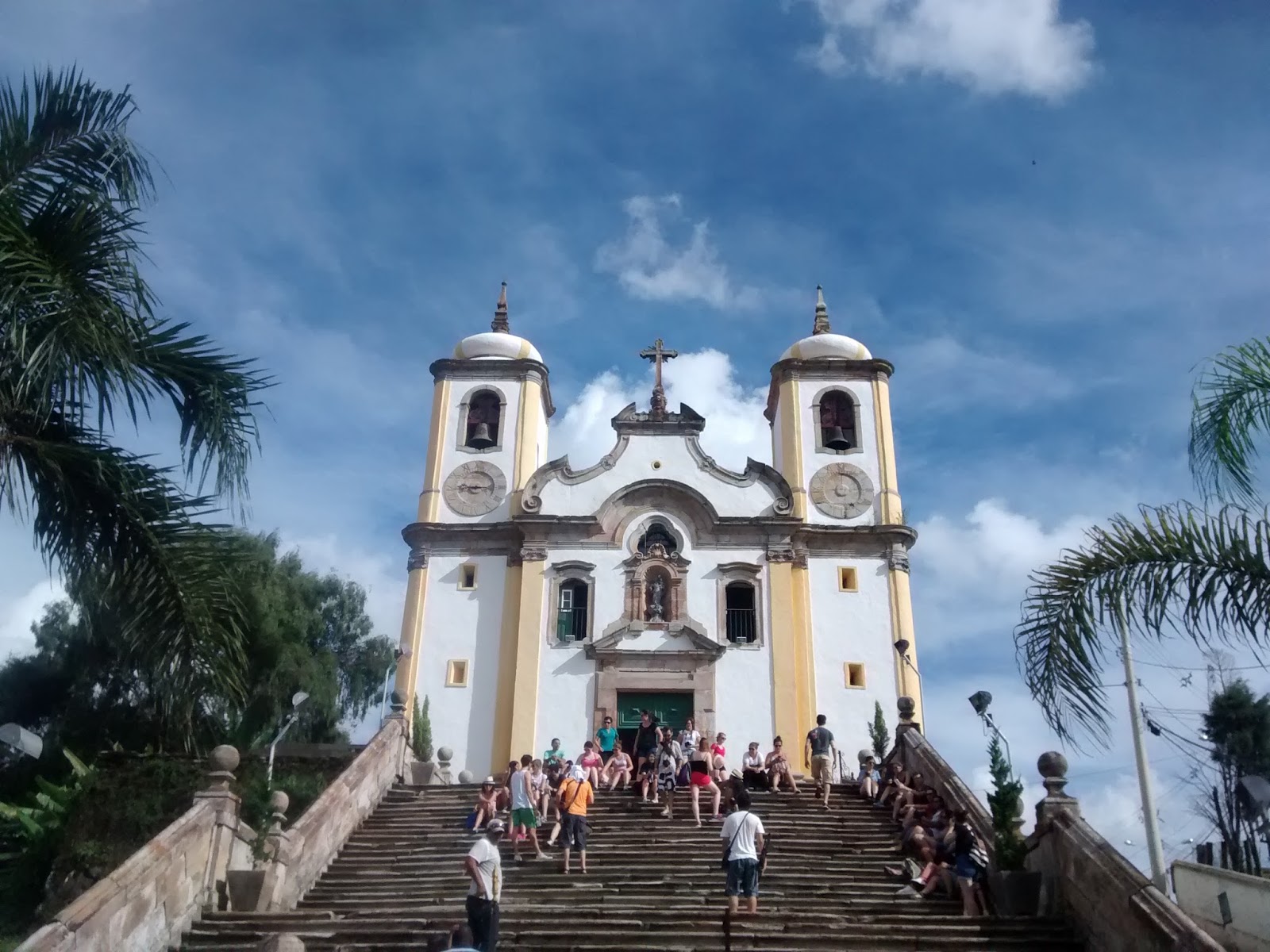
The gold rush provided enough resources for one the most impressive collections of Barroque Art in Brazil, since many churches where built in this style, with heavy wood doors and furniture and adorning altars covered with gold. The most famous sculptor, known as Aleijadinho, made hundreds of religious sculptures in a very peculiar and personal interpretation of the barroque.  


Aleijadinho was the nickname of Antônio Francisco Lisboa, a nickname that in portuguese means something like small handicapped; in fact, his physical difficulties made his art even more impressive. 

This lead Ouro Preto to be the first Brazillian site to be considered a World Heritage Site by UNESCO. 

Aleijadinho´s sculptures can be found on nearby cities, speacially in Congonhas, where it is located his masterpiece, the sculptures of the profhets. There, in the churchyard of the Sanctuary of Bom Jesus de Matosinhos, Aleijadinho used soapstone to carve famous images of the twelve prophets. They have human dimensions and are visited annually by thousands of tourists.


Inconfidência Mineira - The Minas disloyalty

The amount of gold taken from the region and the tributes imposed by the Portuguese Crown made a more illustrated local elite start to question the Portuguese rule over Brazil. A movement lead by Joaquim José da Silva Xavier, called Tiradentes (the "teethtaker"), a local dentist, was the first attempt to declare the Brazil´s independence. The plot was named Inconfidência Mineira (the Minas disloyalty) as some people wanted to organise a revollution against Portugal. The plot was discovered and the punishment applied by the Crown was an example to all traitors, and Tiradentes was quartered in the public square. 

The main building in Ouro Preto´s Central Square now hosts the Museum of Inconfidência. Besides the history of Inconfidência, it shows in a very interisting way how people lived there at that time, for example, which clothes they used, social positions, food and transportation. The museum also hosts many barroque sculptures and utensils from that time.  


Getting there

Ouro Preto is about two-hours drive from Belo Horizonte, the capital of the State of Minas Gerais. If you rent a car at the international airport in Confins (CNF), you´ll have to cross an outer highway around Belo Horizonte (also known in Brazil as BH). After that, a small road among the mountains leads you to Ouro Preto. Depending on traffic jams at Belo Horizonte , the trip can take more time.


 Of course, tour operators offer the same ride. Knowing nearby cities is also a good trip, as they form an ensemble of historic cities from the times of the gold and diamond rush, during colonial period of Brazillian history. 

Sunday, August 9, 2015

LENÇÓIS MARANHENSES


The Place


In the north of Brazil, beetween the Amazonian states and the northeast states, lays the state of Maranhão. It separates the biggest rainforest in the world, the Amazônia, from the semi-arid areas in the countryside of the northeast states, the caatinga. And, in the shores of Maranhão, there´s a very unique formation of dunes and lagoons, known by the name of Lençóis Maranhenses.


This set of white and smooth dunes, seen from afar, seens sheets ("lençóis", in portuguese) lying over a bed.

In this case, a very big bed, which takes many square kilometers from the ocean to the borders of the Preguiças river, which is inside the Lençóis Marenhenses National Park. 

Photos can´t make justice for the beauty of the place, and by only beeing there one can realize the high the dunes can get. Better prepare your legs, it won´t be an easy ride. 

During and some time after the rainy season, lagoons are formed inside the dunes, producing a very different set of natural swimming pools. 


SP GLBT Pride - the best places to dance

São Paulo´s LGBT Pride - the best parties and discos to dance Avenida Paulista, where every year, at june, the São Paulo gay pride i...