Showing posts with label Countryside cities. Show all posts

Wednesday, January 11, 2017

Goiás Velho by night

Goiás Velho by night


Goiás Velho by night


The twilight makes the buildings at Goiás Velho even more beautiful.

Goiás Velho by night


At this time, people go out for dinner and to take their beers or caipirinhas in one of the many bars.


Goiás Velho by night


How to get there: the best option is to rent a car either in Brasilia, either in Goiânia. It is quite easy renting cars on Brazillian airports, and most of the companies provide online reservations. From Goiânia it is 2 and a half hours drive, from Brasilia it is 4 or 4 and a half hours drive. 

Goiás Velho by night

Brasilia airport is best connected to both domestic and international flights, but driving from Goiânia to Goiás Velho should be less tiresome. 

From Brasilia, one can either go through the Pirenópolis path or through Goiânia. This last option should take more time, but roads are better and two-laned in almost both ways. 

If you stay on the main roads, you´ll go southwest to Goiânia and them north to Goiás Velho. Googlemaps may show a shortcut through small cities, which will avoid getting to Goiânia, but be aware roads can be bad at those cities, with holes and critical places, leading to considerable speed reducing. Eventually, it can be better to pass though Goiânia and then go up to Goiás Velho.

The first option, going through Pirenópolis - another historic city (see previous post, see lateral bar) - may be better if you have more time and wants to know both cities. But the road is small, and getting behind trucks will reduce your speed; besides, one should drive with more caution. 


Goiás Velho by night


If you go from Goiânia, the road is almost double-laned each way, and the asfalt is quite new in almost of the road. 

There are regular buses linking Goiânia to Goiás Velho, which can be taken at Goiânia bus depot (rodoviária de Goiânia). The distance is estimated to be done in 3 hours. 

Goiás Velho by night


Monday, January 9, 2017

The Cora Coralina Museum at Goiás Velho - Goias Oldtown

The Cora Coralina Museum at Goiás Velho - Goias Oldtown

Cora Coralina´s Museum

The most interesting cultural atraction at Goiás Velho is the Cora Coralina Museum.

She was one of the first women in Brazil to write poetry, and due to prejudice she started publishing with this pseudonym, in some newspapers.

Cora Coralina´s Museum

Born in Goiás Velho, she moved from the city with her family, and since then she lived in many cities at the São Paulo State. After many years, she got back to Goiás Velho, where her family had this beautiful house by one of the Rio Vermelho´s (Red river) bridge.

The bridge over the Vermelho River, and Cora Coralina´s Museum to the right

There she kept her gardens, wrote a lot of poems, and cooked local candies.  

Goiás Velho


Her reconaissance come in her late years, when she started to publish more.

Her bravery against the prejudice and facing life as well, for sure can put her as one of the first brazillian feminists, in a time this term even didn´t exist, or at least was unspoken in Brazil. 

After her death, her house was transformed into a museum dedicated to her. In the basement, a water source is a curious attraction. 

The museum was once afected by a flood, but it is now completely restored. 

The museum guide claims she was a good cooker too, and she didn´t liked to be interrupted while cooking, as she considered this a serious job. 

Even for those who don´t speak portuguese, the museum shows her clothes, her kitchen, her bedroom, and also a room with her prizes, all of them mixed with her most famous phrases. So it offers an opportunity of time travel, since one can see how life was in the early 20th century in this corner of Brazil. 


Goiás Velho
Entrance to the museum is 8 reais (about 2,5 dollars), and visited are always with a guide. It is not allowed to take pictures from inside. They sell her books only in portuguese, and I don´t think they have them translated to other languages. But many souvenirs can also be bought there as a remembrance of this lovely place.  
Goiás Velho

Tuesday, August 18, 2015

Pirenópolis

Cascades and History in the heart of Brazil

Between Brazilia and Goiânia there is a small historic city called Pirenópolis, one of the first settlements in Brazillian Highlands, just in the middle of the country, surrounded by the "cerrado", which is the biome of this part of the country (see, furthermore, the post about it).


Pirenópolis is reachable after two hours-drive from Brasilia. There are two roads, but the easiest option is to take the highway to Goiânia and them take the small road to "Piri", as the city got affectionately known.  

Pubs and restaurants make a nice spot to hang out with friends or to a romantic escapade. Nature lovers have many cascades and natural parks on its surrounding areas, for hiking and swimming. Some are easily reachable, others will demand more skills and physical preparation. 


(above, no filter-photos of the skies of the Brazillian Highlands and the Cerrado: a spectacle of colours; one of many waterfalls in the region) 

Handicraft and typical drinks from the place can be bought in the small commercial centre of Piri. Restaurants vary from typical food of Goiás, the most central state in Brazil, to italians, seafood, and brazillian food. The cachaça can be found in every pub, as well the caipirinha, the most famous Brazillian drink.  

Thursday, August 13, 2015

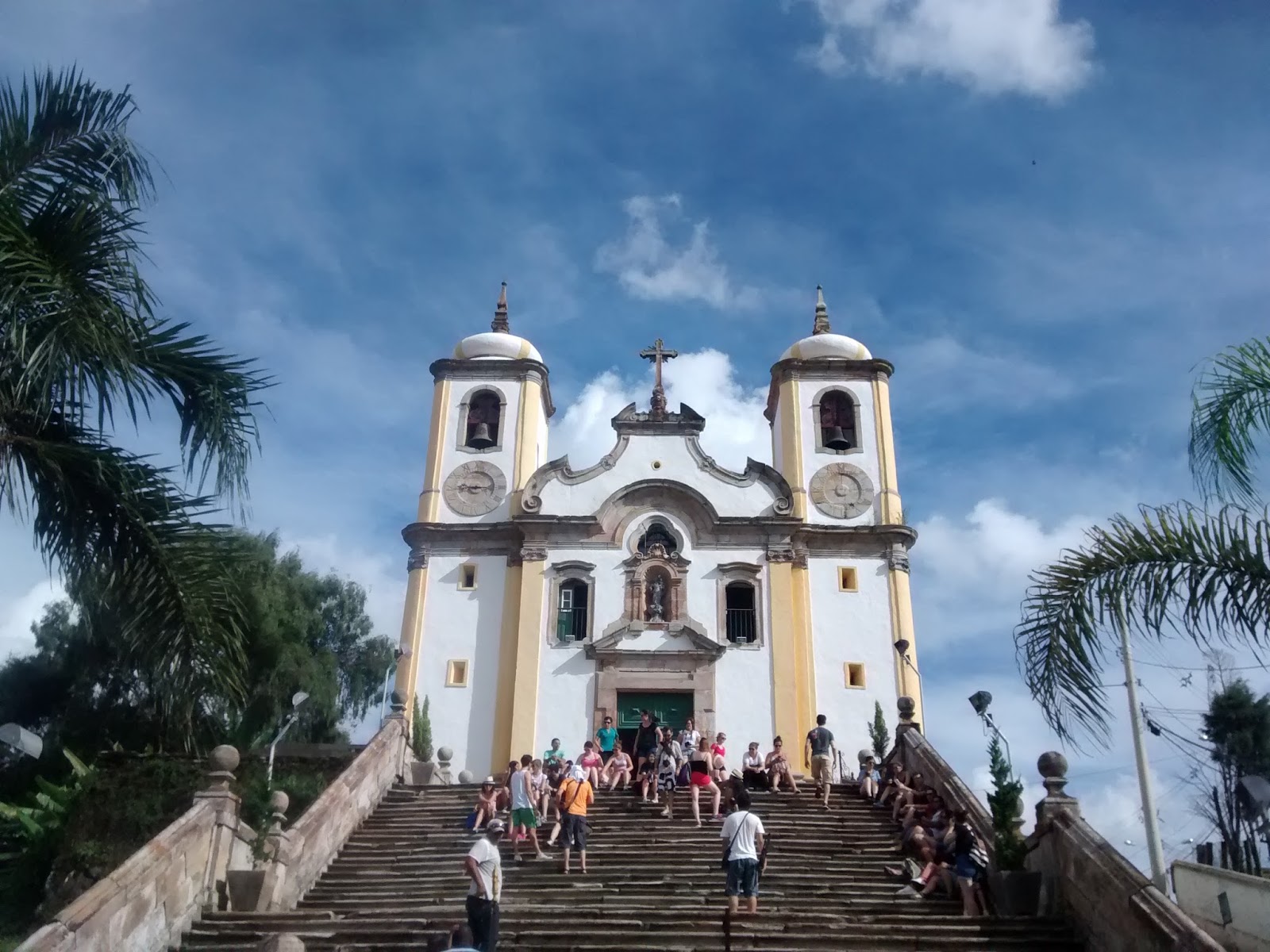
OURO PRETO

History

No place can be a better symbol of the Brazillian colonial past than Ouro Preto, which means "Black Gold". When gold was found in this part of Brazil, by the end of the XVII century and beggining of the XVIII, a gold rush started to the province of Minas Gerais (General Mines), attracting ambitious people to a colony where once the main economic activity was the sugar cane plantation and the extrativism. 

The city flourished as one of the most important within the portuguese colonies, moving the economic centre of Brazil to the southwest region, and making the port of Rio de Janeiro the most important at the time, as it provided the best route to the shores. Later, the capital of the colony would be transferred from Salvador of Bahia to Rio, as the gold was transported from Minas to Rio. 

Barroque Art in Ouro Preto

The gold rush provided enough resources for one the most impressive collections of Barroque Art in Brazil, since many churches where built in this style, with heavy wood doors and furniture and adorning altars covered with gold. The most famous sculptor, known as Aleijadinho, made hundreds of religious sculptures in a very peculiar and personal interpretation of the barroque.  


Aleijadinho was the nickname of Antônio Francisco Lisboa, a nickname that in portuguese means something like small handicapped; in fact, his physical difficulties made his art even more impressive. 

This lead Ouro Preto to be the first Brazillian site to be considered a World Heritage Site by UNESCO. 

Aleijadinho´s sculptures can be found on nearby cities, speacially in Congonhas, where it is located his masterpiece, the sculptures of the profhets. There, in the churchyard of the Sanctuary of Bom Jesus de Matosinhos, Aleijadinho used soapstone to carve famous images of the twelve prophets. They have human dimensions and are visited annually by thousands of tourists.


Inconfidência Mineira - The Minas disloyalty

The amount of gold taken from the region and the tributes imposed by the Portuguese Crown made a more illustrated local elite start to question the Portuguese rule over Brazil. A movement lead by Joaquim José da Silva Xavier, called Tiradentes (the "teethtaker"), a local dentist, was the first attempt to declare the Brazil´s independence. The plot was named Inconfidência Mineira (the Minas disloyalty) as some people wanted to organise a revollution against Portugal. The plot was discovered and the punishment applied by the Crown was an example to all traitors, and Tiradentes was quartered in the public square. 

The main building in Ouro Preto´s Central Square now hosts the Museum of Inconfidência. Besides the history of Inconfidência, it shows in a very interisting way how people lived there at that time, for example, which clothes they used, social positions, food and transportation. The museum also hosts many barroque sculptures and utensils from that time.  


Getting there

Ouro Preto is about two-hours drive from Belo Horizonte, the capital of the State of Minas Gerais. If you rent a car at the international airport in Confins (CNF), you´ll have to cross an outer highway around Belo Horizonte (also known in Brazil as BH). After that, a small road among the mountains leads you to Ouro Preto. Depending on traffic jams at Belo Horizonte , the trip can take more time.


 Of course, tour operators offer the same ride. Knowing nearby cities is also a good trip, as they form an ensemble of historic cities from the times of the gold and diamond rush, during colonial period of Brazillian history. 

SP GLBT Pride - the best places to dance

São Paulo´s LGBT Pride - the best parties and discos to dance Avenida Paulista, where every year, at june, the São Paulo gay pride i...