Praia do Porto da Barra
The best beaches of Bahia State are not in Salvador, but it doesn´t mean you can´t have a deserved sea bath after some hours strolling through the city.
In this case, take the chance if you are in Barra neighbourhood, or if you are visiting the three fortress, to stop by Porto da Barra beach.
As it lays inside the All Saint´s Bay, its waters are calm enough for stand up paddle practitioners, kayaking, diving into the sea from the remnants of a stone pier of the stronghold, and other sports.....or simply laying at the beach drinking a beer or a caipirinha.
Some tents rent chairs and beach umbrellas, and sell the drinks you need, so you don´t have to carry anything with you, unless beachwear, to enjoy the sunset by the Porto da Barra beach.
 |
||
Cannons at the Santa Maria Fortress, with the
Porto da Barra beach, to the left, and Forte São Diogo, atop.
The Porto da Barra beach is the most visited by the LGBT community, where, by night, some bars welcomes gay-friendly visitors.
|
Friday, May 26, 2017
Praia do Porto da Barra


Thursday, May 25, 2017
Salvador - Forte Santa Maria
Salvador - Forte Santa Maria
 |
| Salvador - Forte Santa Maria |
Getting inside the Bahia de Todos os Santos, west to the Farol da Barra, is the Forte Santa Maria, the second stronghold protecting All Saint´s Bay.
Cannons and a small museum welcome visitors. Nice pics can be taken of the Farol da Barra and the Forte São Diogo, the third fortress in line.
 |
| Farol da Barra, view from Santa Maria Fortress |
Just 650m separate Farol da Barra from Santa Maria Fortress.
Wednesday, May 24, 2017
Forte São Diogo
Forte São Diogo
 |
| Forte São Diogo, at Salvador, Bahia, Brazil |
The Forte São Diogo, is the third fortress on the entrance of All Saint´s Bay, just some meters from Forte Santa Maria.

The two strongholds are separated by the Porto da Barra beach (see next post).
The fortress is still kept by the Brazillian Army, and has a nice view from atop, for those willing to climb it.
Built between 1626 and 1635, after the dutch invasion of Salvador (1624-1625), it granted the defense of Salvador in 1638, when a new atempt of foreign invasion was expelled.
Built between 1626 and 1635, after the dutch invasion of Salvador (1624-1625), it granted the defense of Salvador in 1638, when a new atempt of foreign invasion was expelled.
Also, a permanent art exposition of the argentinian artist Hector Julio Paride Bernabó, also known as Carybé, is held inside the fortification and can be visited under payment of 20 reais (about 6 US dollars).
Carybé fell in love with Salvador, and made good friendship with Jorge Amado, Bahia´s most famos writer. Both are dead, but the Jorge Amado´s house in Pelourinho works as a museum which tells the history of the writer (see future post). Carybé died in Salvador, where some of its artwork can be found, as in this small museum inside Forte São Diogo.
Tuesday, May 23, 2017
Mercado Modelo de Salvador
Mercado Modelo de Salvador
(Salvador´s Central Market)
The Mercado Modelo in located at Cidade Baixa (Down City), accesible from Cidade Alta (High City) through Elevador Lacerda (Lacerda´s lift, see previous post).
The lift works as a regular public transportation, and its tariff is less than 50 cents of real, really cheap. Unfortunatelly, at Cidade Baixa there´s no much to see besides the Mercado Modelo, as basically the Cidade Baixa helds the seaport, the customs and trade companies.
 |
| The Elevador Lacerda (Lacerda´s lift, to the left) and the Mercado Modelo, at the Cidade Baixa (center) Salvador, Bahia, Brazil |
The Mercado, however, is pretty much focused on tourists, where you can buy local stuff, food, and craftsmenship.
It closes by 7 pm, but one hour before there´s a nice sunset view on the 2nd floor, at the bar facing the sea. A good place to take your favorite brazillian juice, soft dringk, beer or caipirinha, as the sun goes down.
Between the Mercado and the sea, there is the touristic harbour, from where boats departing to Morro de São Paulo (see previous post) and other touristic attractions can be taken.
Monday, May 22, 2017
Farol da Barra - Salvador´s most remarkable landmark
Farol da Barra - Salvador´s most remarkable landmark

Farol da Barra (Barra´s Lighthouse) has now a very beautiful night lighting. During the day, inside its fortress, it is possible to visit a navy museum. In fact, the other next two fortress, going west towards the Bahia de Todos os Santos ("All Saints Bay"), have received night lighting and a urban refurbishment of its sidewalks, rendering a very good spot for a stroll, day or night.
As capital of Brazil during colonial times, all the fortress served as the city´s protection against pirates and foreing forces.
At night, the sidewalk is full with restaurants and bars, ranging from simple options to sophisticated ones.
See next posts about the other fortress at Barra.
At night, the sidewalk is full with restaurants and bars, ranging from simple options to sophisticated ones.
See next posts about the other fortress at Barra.
Sunday, May 21, 2017
Salvador - getting ready for more tourists
A recent trip to Salvador made me notice the city is getting great improvements on its urban infraestructure, espeacially compared to a decade ago.

Metro is being built to reach the ariport (SSA), scheduled to the end of 2017, so hopefully it will be posible for tourists to use it to new year´s eve and 2018 carnival. Few cities in Brazil have the metro or subway reaching the airport, so it will be a great advantage for tourists in Salvador, though regular taxis, uber and 99taxis are also available at the airport.
Plus, many touristic places at Barra and Rio Vermelho, and espeacially the streets, squares and gardens by the sea were improved by the Municipality, making of it a great place for strolling while feeling the seabreeze.
The city is becoming far more welcoming to tourists, though the downside is theft/pickpocketing, so I recommend to be very carefull with smartphones, cameras and wallets. Also, there´s still plenty of people trying to insistently sell local stuff; if you´re not interested, just say no (also insistently) and get away. Leave your valuable things at your hotel´s room safe box, and enjoy this formidable historic city, a result of mixed cultures of Brazil.
Wednesday, January 11, 2017
Goiás Velho by night
Goiás Velho by night
 |
| Goiás Velho by night |
The twilight makes the buildings at Goiás Velho even more beautiful.
 |
| Goiás Velho by night |
At this time, people go out for dinner and to take their beers or caipirinhas in one of the many bars.
 |
| Goiás Velho by night |
How to get there: the best option is to rent a car either in Brasilia, either in Goiânia. It is quite easy renting cars on Brazillian airports, and most of the companies provide online reservations. From Goiânia it is 2 and a half hours drive, from Brasilia it is 4 or 4 and a half hours drive.
 |
| Goiás Velho by night |
Brasilia airport is best connected to both domestic and international flights, but driving from Goiânia to Goiás Velho should be less tiresome.
From Brasilia, one can either go through the Pirenópolis path or through Goiânia. This last option should take more time, but roads are better and two-laned in almost both ways.
If you stay on the main roads, you´ll go southwest to Goiânia and them north to Goiás Velho. Googlemaps may show a shortcut through small cities, which will avoid getting to Goiânia, but be aware roads can be bad at those cities, with holes and critical places, leading to considerable speed reducing. Eventually, it can be better to pass though Goiânia and then go up to Goiás Velho.
The first option, going through Pirenópolis - another historic city (see previous post, see lateral bar) - may be better if you have more time and wants to know both cities. But the road is small, and getting behind trucks will reduce your speed; besides, one should drive with more caution.
 |
| Goiás Velho by night |
If you go from Goiânia, the road is almost double-laned each way, and the asfalt is quite new in almost of the road.
There are regular buses linking Goiânia to Goiás Velho, which can be taken at Goiânia bus depot (rodoviária de Goiânia). The distance is estimated to be done in 3 hours.
 |
| Goiás Velho by night |
Monday, January 9, 2017
The Cora Coralina Museum at Goiás Velho - Goias Oldtown
The Cora Coralina Museum at Goiás Velho - Goias Oldtown
 |
| Cora Coralina´s Museum |
She was one of the first women in Brazil to write poetry, and due to prejudice she started publishing with this pseudonym, in some newspapers.
 |
| Cora Coralina´s Museum |
 |
| The bridge over the Vermelho River, and Cora Coralina´s Museum to the right |
There she kept her gardens, wrote a lot of poems, and cooked local candies.
 |
| Goiás Velho |
Her bravery against the prejudice and facing life as well, for sure can put her as one of the first brazillian feminists, in a time this term even didn´t exist, or at least was unspoken in Brazil.
After her death, her house was transformed into a museum dedicated to her. In the basement, a water source is a curious attraction.
The museum was once afected by a flood, but it is now completely restored.
The museum guide claims she was a good cooker too, and she didn´t liked to be interrupted while cooking, as she considered this a serious job.
Even for those who don´t speak portuguese, the museum shows her clothes, her kitchen, her bedroom, and also a room with her prizes, all of them mixed with her most famous phrases. So it offers an opportunity of time travel, since one can see how life was in the early 20th century in this corner of Brazil.
 |
| Goiás Velho |
Entrance to the museum is 8 reais (about 2,5 dollars), and visited are always with a guide. It is not allowed to take pictures from inside. They sell her books only in portuguese, and I don´t think they have them translated to other languages. But many souvenirs can also be bought there as a remembrance of this lovely place.
 |
| Goiás Velho |
Sunday, January 8, 2017
Goiás Velho - Goias Oldtown
Goiás Velho - Goias Oldtown
 |
| Goiás Velho - GO - Brasil |
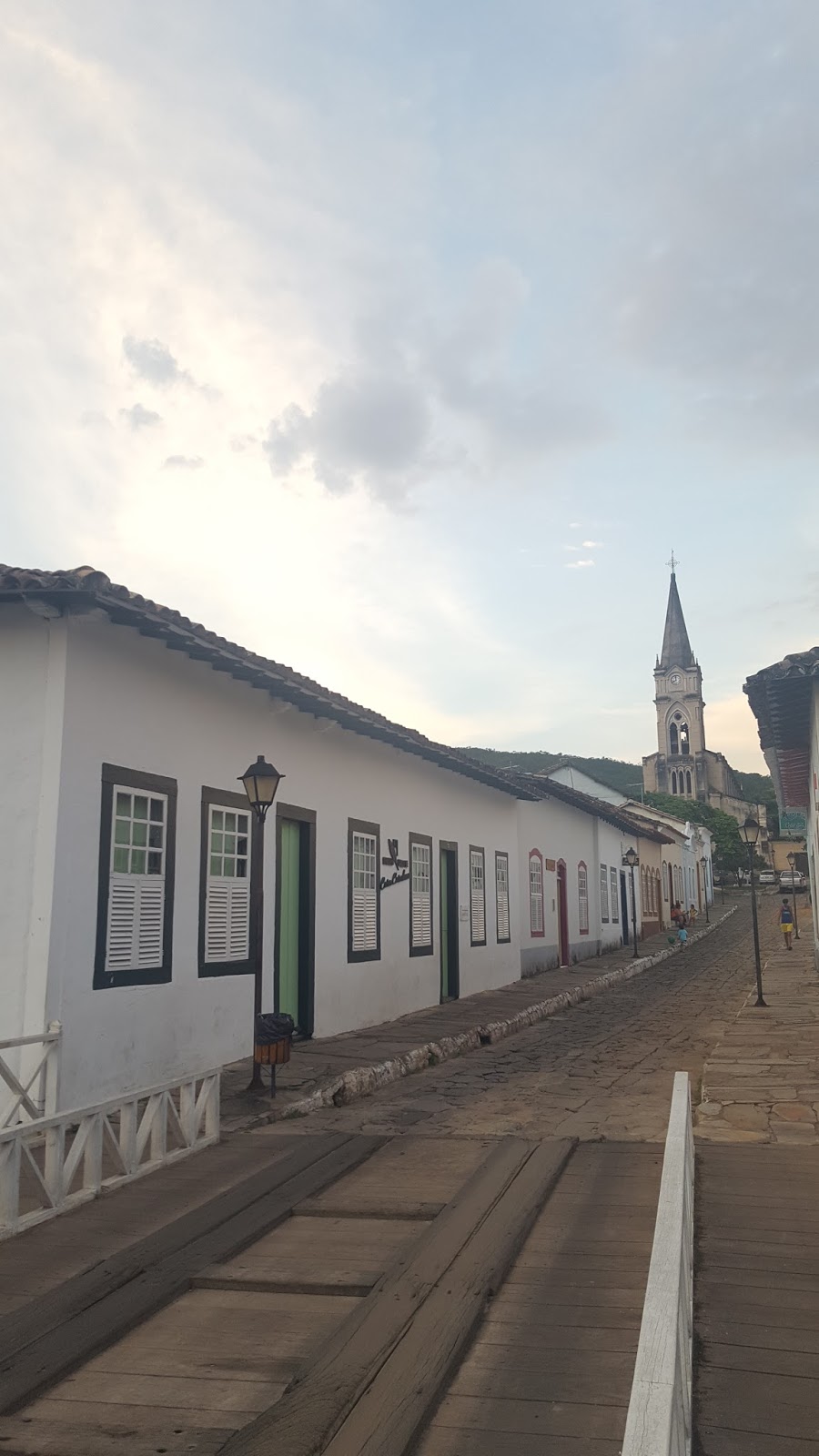
In the Brazillian Highlands, four hours drive away from Brasilia, or two and half hours drive away from Goiânia, the capital of the Goiás State, there´s this charming historic city called Goiás Velho.
It means the Old Goiás, because it was the state´s capital during the colonial period, untill the construction of Goiânia.
 |
| Goiás Velho - GO - Brasil |
 |
| Goiás Velho - GO - Brasil |
 |
| Goiás Velho - GO - Brasil |
Goiás Velho wasn´t favored by history in terms of economic development or population bourgeoning, so it remained in a far way place from the big cities. But I think this made an advantage for keeping the place very authentic and historically protected.
 |
| Goiás Velho - GO - Brasil |
As it is far away from big cities, and also there is no big airport nearby, it remained protected from massive tourism or major economic booms, so the historical buildings are very well preserved.
 |
| Goiás Velho - GO - Brasil |
 |
| Goiás Velho - GO - Brasil |
 |
| Goiás Velho - GO - Brasil |
Monday, December 26, 2016
The Dom Bosco Sanctuary
The Dom Bosco Sanctuary (Santuário Dom Bosco)
 |
| The Dom Bosco Sanctuary at Brasilia - http://brazilguide.blogspot.com.br/ |
Out of the mainstream tours in Brasilia, there´s this incredible many shades of blue-windowed church at W3 south street, just in the begining of Asa Sul neighbourhood.
 |
| The Dom Bosco Sanctuary at Brasilia - http://brazilguide.blogspot.com.br |
Far less known than Brasília´s Cathedral, there´s not a single person who doesn´t express a wow! once entering this astonishing place.
It is realy worth visiting. According to sunlight, the colours inside may vary, and even by night the place is gorgeous, with its huge chandelier almost flying over the audience.
 |
Dom Bosco was an italian priest, who lived in the XIXth century, and he had a dream of a prosperous place, close to a lake, from where land would provide milk and honney, in between the paralels 15 and 20. In italian (text taken from wikipedia):
Tra il grado 15 e il 20 grado vi era un seno assai lungo e assai largo que partiva di un punto che formava un lago. Allora una voce disse ripetutamente, quando si verrano a scavare le miniere nascoste in mezzo a questi monti di quel seno apparirà qui la terra promessa fluente latte e miele, sarà una ricchezza inconcepibilie. (Memorie Biografiche, XVI, 385-394)
Many people claim he foresaw the building of Brasilia, so he was chosen as the city´s patron saint.
Crossing the lake, in the outskirts of the city, there´s also the Dom Bosco shrine (Ermida Dom Bosco), from where the city can be seen. See previous post about it, but don´t mistake the two places: they´re quite far away.
Subscribe to:
Posts (Atom)
SP GLBT Pride - the best places to dance
São Paulo´s LGBT Pride - the best parties and discos to dance Avenida Paulista, where every year, at june, the São Paulo gay pride i...

-
 Chapada dos Veadeiros (7) The Moonvalley Rocks at the moonvalley, at Chapada dos Veadeiros in Brazil (O vale da Lua) In a p...
-
Brazillian main airlines TAM (Transportes Aéreos Mercosul) www.tam.com.br TAM started as a small carrier in São Paulo state, and n...
-
 Chapada dos Veadeiros (2) Getting to the Chapada dos Veadeiros National Park The National Park is located in the municipality...